|
|
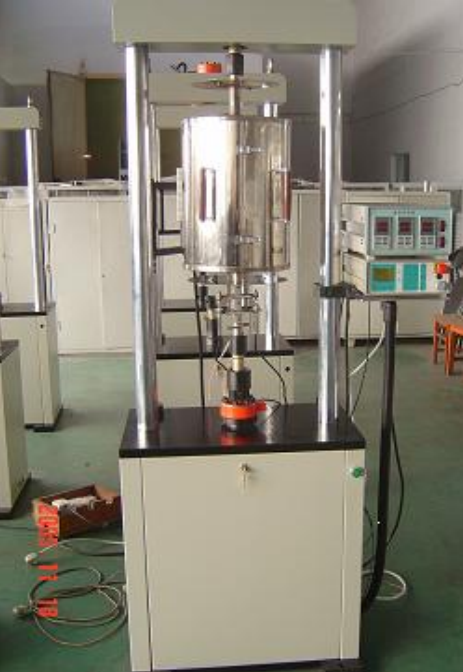
RDW-100 Electronic Creep Testing Machine
Collect
RDW-100 Electronic creep and endurance strength testing machine 1. Product Name: Electronic Creep and Endurance Strength Testing Machine
(The picture is for reference only, and the product is subject to the actual product) II. Product Functions and Features The RDW-100 electronic creep and endurance strength testing machine is a new type of testing machine equipped with a fully digital measurement and control system. It fully meets the requirements of GB/T2039-1997 "Metallic Materials - Tensile Creep and Endurance Testing Method". It can perform tensile creep and endurance performance tests on metallic materials under high temperature or room temperature conditions. Additionally, it can also conduct instantaneous tensile tests, dynamic tensile tests, relaxation tests, fatigue strength tests, etc. It is a commonly used equipment for metallurgical departments, research institutions, universities, aerospace and enterprise units for the inspection of metallic material properties and scientific research projects. According to the standard test method for creep of overhead conductors, creep tests can be conducted using specialized fixtures and software systems. III. Based on standards: 1. GB/T2611-2012 "General Technical Requirements for Testing Machines"; 2. GB/T16825.1-2008 "Verification of Static Uniaxial Testing Machines - Part 1: Verification and Calibration of the Force Measuring System of Tension and (or) Compression Testing Machines"; 3. JJG276-2009 Verification Standard for High-Temperature Creep and Endurance Strength Testing Machines 4. GB/T2039 Method for tensile endurance test of metallic materials 5. GB/T 22077-2008 "Test Method for Creep of Overhead Conductors" ◆ High-temperature furnace system The high-temperature furnace system consists of a support arm, a hanger, a split-type atmospheric furnace body, and a temperature control system. The high-temperature furnace is hung on the side rear pillar through the hanger and can move in and out of the testing space along the rotation. It has a stainless steel shell. The temperature controller adopts a PID adaptive adjustment mode, with high temperature control accuracy and small temperature fluctuation. 6.1 Temperature range: 300~1200℃ (Capable of continuous operation for over 5000 hours) 62 Temperature gradient: ≤±2℃ 6.3 Mean tropical length: 100mm 6.4 Power of environmental test chamber: 5KW
◆ Temperature control system The core temperature control component of this system is developed in-house. Equipped with a communication interface, the system can operate independently or be centrally managed through networking with a PC. Its working mode involves independent temperature control and PID regulation for three circuits, and it can also be set to have the second and third circuits track the working mode of the first circuit. 9.1 Temperature measurement range: 200℃~1200℃ 9.2 Temperature measurement accuracy: ≤0.3% 9.3 Temperature gradient: ≤±2℃ 94 Temperature overshoot: <2℃ IV. Experimental auxiliary tools The auxiliary testing equipment is made according to the size and shape of the test sample. V. Main Technical Indicators: 6.1 Maximum test force: 100KN 6.2 Effective force measurement range: 0.5% to 100% FS 6.3 Relative error of force indication: ±0.5% 6.4 Constant force control error: ±0.5% 6.5 Coaxiality: ≤10% 6.6 Maximum deformation: 10mm (optional) 6.7 Effective measurement range of deformation: 0~100%FS 6.8 Deformation resolution: 1um 6.9 Absolute deformation error: 2um 6.10 Constant deformation control error: 2um 6.11 Sensitivity: ≤±0.03% 6.12 Test speed range: 0.05~50mm/min 6.13 Relative error of speed indication: ±0.5% 6.14 Maximum travel of the pull rod: 200mm 6.15 Overall dimensions of the main unit: 780×550×2380 6.16 Host weight: 1300Kg 6.17 Host power: 0.75KW
|