|
waw-600G
Collect
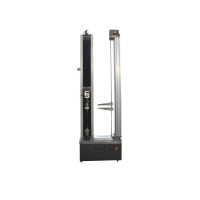
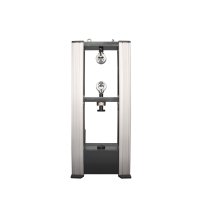
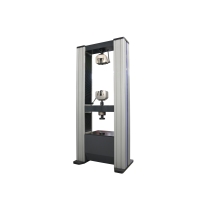
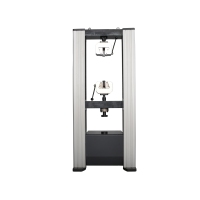
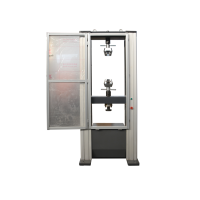
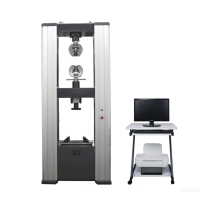
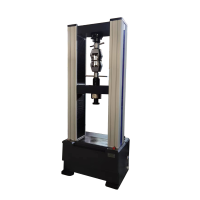
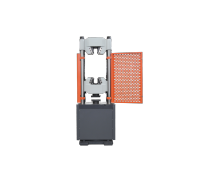
WAW-600G 1. Product Name: Microcomputer-controlled Electro-hydraulic Servo Universal Testing Machine II. Specification and Model: WAW-600G
III. Applicable Standard: GB/T 2611-2007 "Universal Technical Requirements for Testing Machines" JB/T 7406.1-1994 "Terminology for Testing Machines - Material Testing Machines" GB/T 16826-2008 Electro-hydraulic Servo Universal Testing Machine GB/T 16825.1-2008 "Verification of Static Uniaxial Testing Machines - Part 1: Tension and (or) "Inspection and Calibration of the Force Measuring System of the Pressure Testing Machine" GB/T 22066-2008 "Evaluation of Computer Data Acquisition Systems for Static Uniaxial Testing Machines" JJG 139-1999 "Tensile, Compressive, and Universal Testing Machines" JB/T 6146-2007 Technical Conditions for Extensometers JB/T 6147-2007 "Technical Requirements for Packaging, Packaging Marking, Storage and Transportation of Testing Machines" GB/T 228.1-2010 "Metallic Materials - Tensile Testing - Part 1: Method of Test at Room Temperature" GB/T 7314-2005 "Metallic Materials - Compression Testing at Room Temperature" GB/T 232-2010 "Metallic Materials - Bend Test Method" ISO/CD 6892-2:2011 Metallic materials -- Tensile testing – Part 1: Method of test at room temperature ASTM A370 Standard Test Methods and Definitions for Mechanical Testing of Steel Products IV. Functions and Applications: This series of testing machines is an important instrument for testing the physical properties, mechanical properties, process performance, structural seismic strength, and internal and external defects of various materials and their products under various environmental and simulated conditions. It can perform tests on metal or non-metal materials according to corresponding standards, including tensile, compressive, bending, and shear tests. It can measure performance indicators such as tensile strength, yield strength, specified non-proportional extension strength, and elastic modulus of the tested materials. It can achieve closed-loop control of equal rate loading, equal rate deformation, equal rate displacement, and equal rate strain. The design of this testing machine takes into account the possibility of expanding and assembling other fixtures to complete more tests. For example, installing a high-temperature furnace allows for high-temperature tensile tests; equipping with bolt fixtures enables bolt tensile and load-holding tests; equipping with shear fixtures allows for round bar shear strength tests; adding bending, shear, splitting, and elastic modulus instruments in the compression space enables concrete and cement sample tests; and equipping with specialized fixtures such as steel balls, anchor chains, and fasteners allows for various tests of corresponding products. This testing machine is precise, powerful, easy to operate, stable, and reliable. It can be widely applied in various industries such as universities, research institutes, testing institutions, aerospace, military, metallurgy, machinery manufacturing, transportation construction, and construction materials for precise material research, material analysis, material development, and quality control. It can also be used for process qualification and performance verification tests of materials or products. Main technical parameters: (1) Host parameters: 1. Number of columns: 6 columns (4 vertical columns, 2 lead screws); 2. Maximum distance between stretching jaws (mm): 800; 3. Maximum compression space (mm): 700; 4. Effective distance between columns (mm): 485; 5. Maximum flow rate of oil pump (L/min): 5.1; 6. Maximum outer diameter of the oil cylinder (mm): Φ260; 7. Piston diameter (mm): Φ180; 8. Maximum piston stroke (mm): 255; 9. Maximum speed of piston movement under no load (mm/min): 100; 10. Loading rate range: 0.02%-2%FS; 11. Column diameter (mm): Φ70; 12. Lead screw diameter (mm): Tr75×8; 13. Workbench size (mm): 1000×680; 14. Workbench thickness (mm): 85; 15. Crossbeam thickness (mm): 320; 16. Maximum speed of beam adjustment (mm/min): approximately 160; (II) Attached parameters: 1. Clamping aid: Wedge-type hydraulic automatic clamping aid 2. Round sample clamping range (mm): Φ10-Φ18, Φ18-Φ29, Φ29-Φ40; 3. Plate sample clamping thickness (mm): 0-16, 16-30; 4. Maximum clamping width of plate specimen (mm): 90; 5. Dimensions of upper and lower pressing plates (mm): Φ160; 6. Diameter of bending roller (optional) (mm): Φ30 7. Bending roller diameter (optional) (mm): Φ30 8. Maximum width of curved support roller (optional) (mm): 140; 9. Maximum spacing of curved support rollers (optional) (mm): 400; 10. Maximum allowable bending degree (optional) (mm): 90;
|